

Champagne Eric Rodez

Ignoring trends since 1984, Eric tends his vineyards in organic and biodynamic viticulture, famously using aromatherapy on his 6 hectares in Ambonnay Grand Cru. While there is a myriad of rising stars in the region producing great Champagnes, Eric has been a pioneer in more ways than one, he is an Iconic grower that inspired the new generation.
From his time studying in Burgundy, he brought barrel ageing back to his family cellars in the early 80s and mastered his craft at Champagne Krug with Henri Krug for 1 year. Back home in Ambonnay, the notably disastrous 1984 vintage throw a tsunami wave at Eric, which lead him to start a soil revolution in his vineyards.
The vineyards and the respect of the environment is the number one priority at Champagne Eric Rodez. They are lucky custodians of some of the most prestigious plots in Champagne and Ambonnay alone. It is their duty to take care of them, listeningto every season, using all natural tricks to grow healthy grapes, being curious and using their sensibility to achieve the highest quality. His son Michael and daughter in law Aurelie are now assuming pivoting roles in both vineyards and cellars under his guidance.
The 2024 release marks a fresh start for Champagne Eric Rodez, with the new labels showing the Edition Number. A new way to help all trade professionals, collectors, and consumers to better identify his “Vins d’Auteur” range year after year, The appearance of the Edition number on the label will offer better traceability and visibility in the market.
tHE wINES

Deeply expressive from the outset — the vinification in old oak delivers a complex oxidative undertow of toasted nuts and beeswax, while the Chardonnay's natural acidity keeps the aromatics fresh and precise. The Ambonnay terroir shines in the chalky, mineral undercurrent that runs through the ripe orchard fruit. The multi-vintage structure creates a wine of impressive layered complexity. Pinot Noir delivers body, presence and a silky mid-palate richness, while the Chardonnay provides precision and length. The 2g/l dosage is almost ascetic, laser-focused, vibrating with tension, yet perfectly balanced by the generous phenolic ripeness derived from barrel work. The finish lingers with a persistent saline, chalky mineral resonance.
Non Vintage

One of the most distinctive rosé Champagnes being made today. Rodez's macération technique is a statement here — combined with deep reserve wine complexity and near-total barrel vinification — produces something closer in spirit to a fine Burgundian rosé than a conventional Champagne. Edition 38's is Structured and serious with exceptional reserve wine depth (57% from 2019 and earlier) makes it a wine of genuine gravitas. For those who find most rosé Champagne too light, this is the answer.
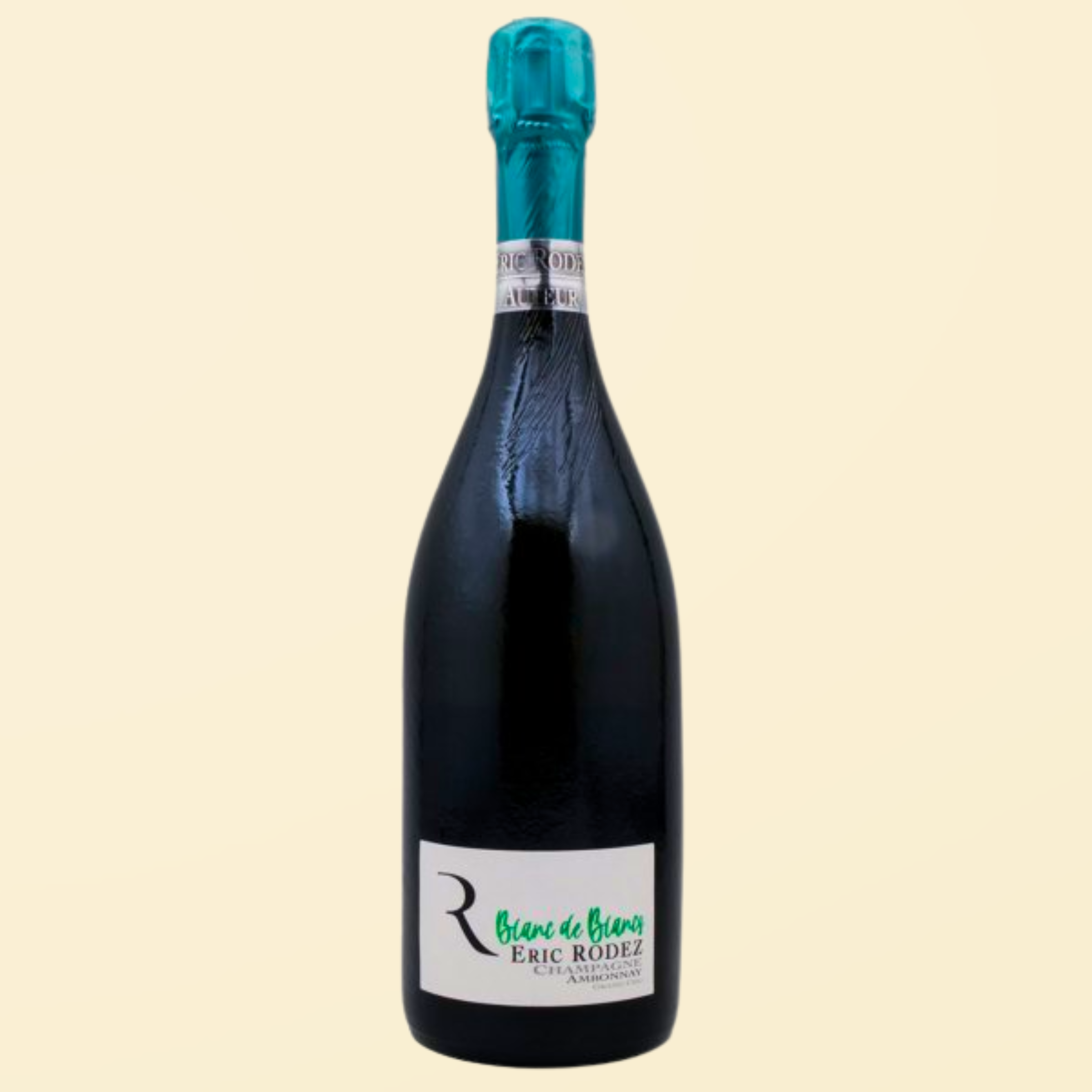
Precise, tensile, and strikingly mineral — the 93% chalk soils of Ambonnay, the highest chalk concentration in all of Champagne, speak with extraordinary clarity here. The 75% blocked malolactic fermentation preserves a vibrant, focused acidity that gives the wine its characteristic backbone and energy. The 2020 vintage, forming the largest single component at 31%, provides generous mid-palate weight and ripe stone fruit, beautifully counterbalanced by the leaner, more citrus-driven 2021 and the bright, fresh lift of 2022. The palate is creamy yet taut, rich yet precise — a seamless harmony of depth and tension that is the hallmark of Rodez's Blanc de Blancs style.

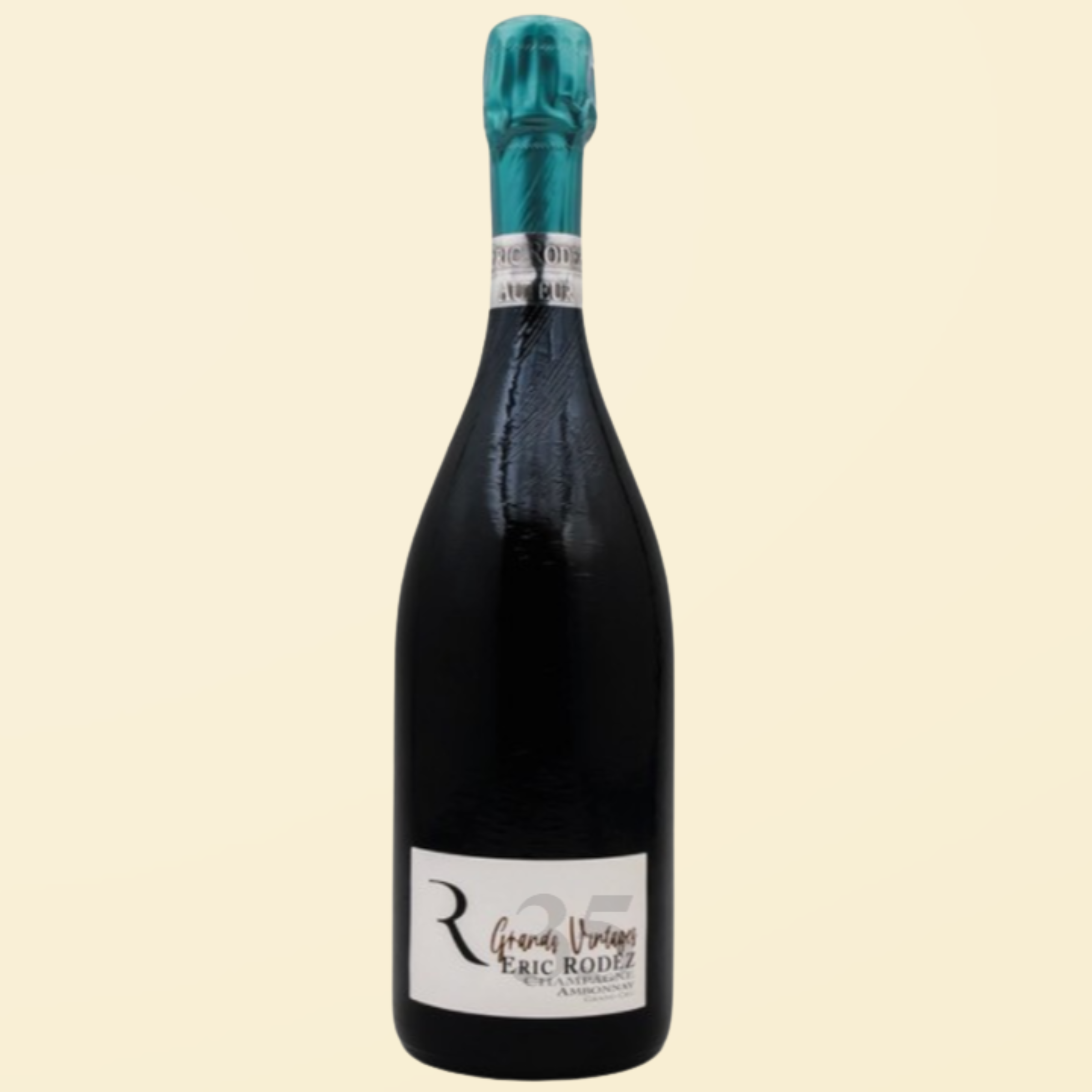
Cuvée des Grands Vintages is Rodez's most uncompromising statement, a Champagne at its most vinous and contemplative. The six years on lees have transformed what was already a deeply structured blend into something of profound complexity. The selection of wine in its composition is made to stand time and ability to age. The vintage backbone is exceptional. The 2016–2018 triumvirate is a fortunate one: 2016 brought freshness and precise, cutting acidity; 2017 provided warm, concentrated ripeness; and 2018 — one of the great Champagne vintages of recent decades — adds density and structure. With 29% reserve wines behind them, the assemblage has extraordinary depth. To keep or to drink the choice is entirely yours.
This wants serious food: roasted Bresse chicken, aged Comté, white truffle dishes, lobster thermidor, or a côte de veau. It would be a shame to drink it as an aperitif.
Non Vintage - Magnums


Single Vineyard

Arrestingly pure and focused, the east-facing exposition of the parcel is detectable bringing an amazing tension in a vintage defined by warmth and generous ripeness.
The early harvest noted here is therefore significant: Rodez picked, preserving the acidity. This is pure Ambonnay Chardonnay terroir, uncompromised.
The warmth of the vintage and the maturation in barrels add just a supporting layers of complexity.
Prestige Cuvée

This wine is almost paradoxical — simultaneously rich and lean, aged and vivid. The palate's first impression is of immense breadth and density. Empreinte Blanche is the crown of the Rodez range, the finest interpretation of the Ambonnay terroir through the lens of a single varietal. A Champagne of museum-level ambition assembled from five of Ambonnay's greatest Chardonnay plots, vinified entirely in barrel without malolactic fermentation, followed by eleven years of lees ageing before release. The result is a wine that transcends the category it nominally belongs to: not a Blanc de Blancs in the conventional sense, not a prestige cuvée by commercial definition, but something rarer and more personal. The vineyards entering its composition are La Grande Ruelle, Les Champsaults, Le Noyer Saint Pys, Les Morins, Les Crayeres. The 2014 is one of the most compelling of the decade. A Champagne defined by its freshness and remarkable terroir expression.
A wine of this age and complexity needs room to breathe and temperature to open. Food pairing: white truffle, aged Comté or Beaufort, roasted langoustine, or simply — nothing at all.

The 2014 Champagne vintage is one of the most compelling of the decade — frequently underestimated at release but consistently rewarding with age. 2014 is close to an ideal vintage,the cool-ripened, naturally high-acid fruit provides exactly the structural backbone needed for prolonged ageing on the lees and the longevity of the cuvee. This is the most complex wine in the Rodez range — and one of the most haunting. The single vineyrads entering its composition are Le Moulin, Les Secs, Les Vaux saint Basles, Les Fournettes, Les Beurys.
The palate is monumental from the first sip: broad, dark and deeply textured reflecting the density of old-vine Ambonnay Pinot Noir. The finish defies description in terms of length: mineral, dark, smoky and persistent
Fortified
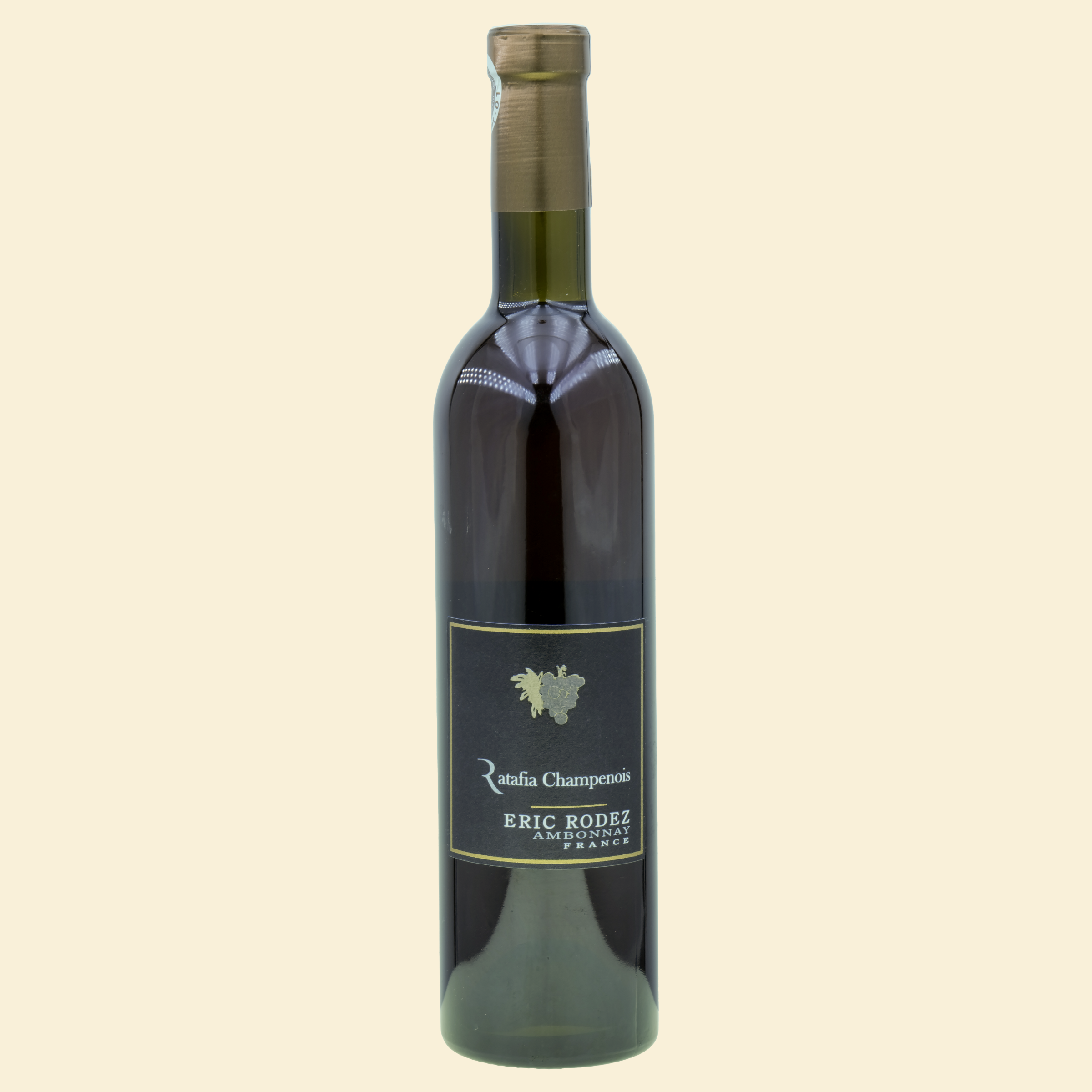
Ratafia is Champagne's traditional mistelle — freshly pressed grape juice (moût) whose fermentation is stopped by the addition of grape spirit, typically to around 17–20% ABV. The result is a fortified, naturally sweet vin de liqueur with full fruit character preserved intact by the alcohol. Long made by growers for their own tables, it was awarded its own Champagne appellation in 2015
Rodez's approach to Ratafia is categorically different, as you would expect from this man. Made solely from Ambonnay Pinot Noir and by running a solera from 2015 to 2020. He has created a wine of layered complexity. The result is a wine that is simultaneously aged and alive — a Ratafia with the structural ambition of a great Banyuls or Maury, yet with the unmistakable chalk-mineral identity of Ambonnay Grand Cru beneath it.
If you like tawny port or Colheita, this is on for you. Deep, lustrous amber colour, with notes of medjool dates, dried figs, muscovado and hazelnut. No doubt it will be enchanting every cheese board.